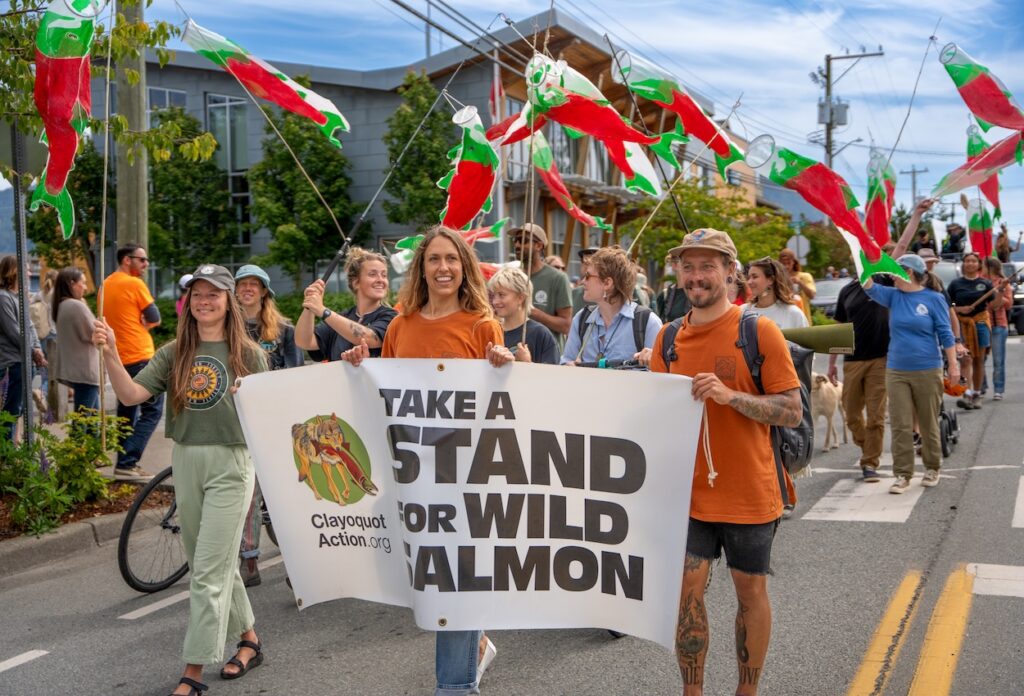
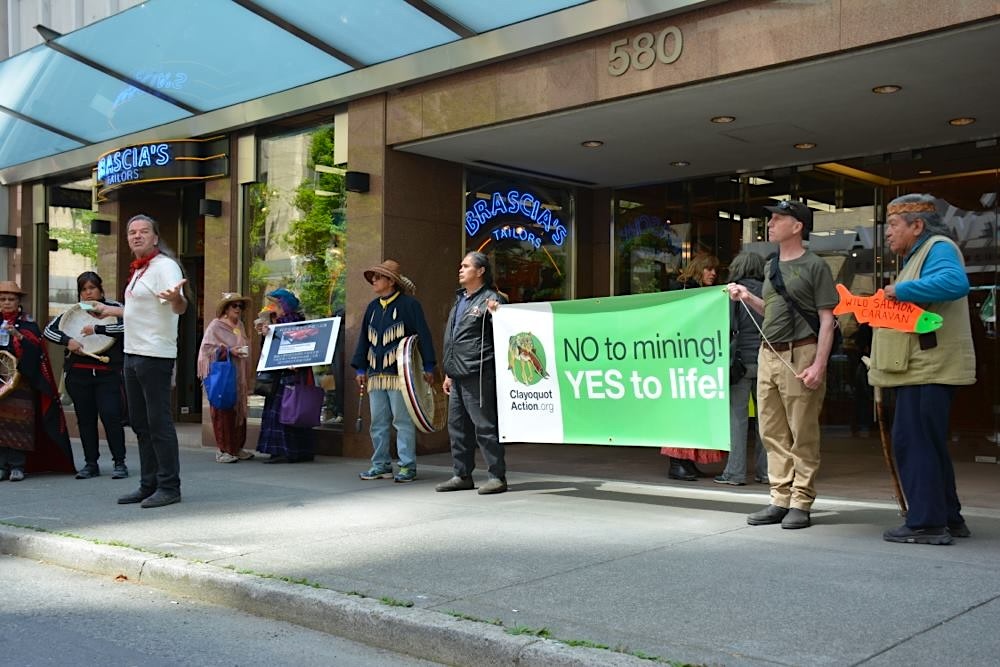
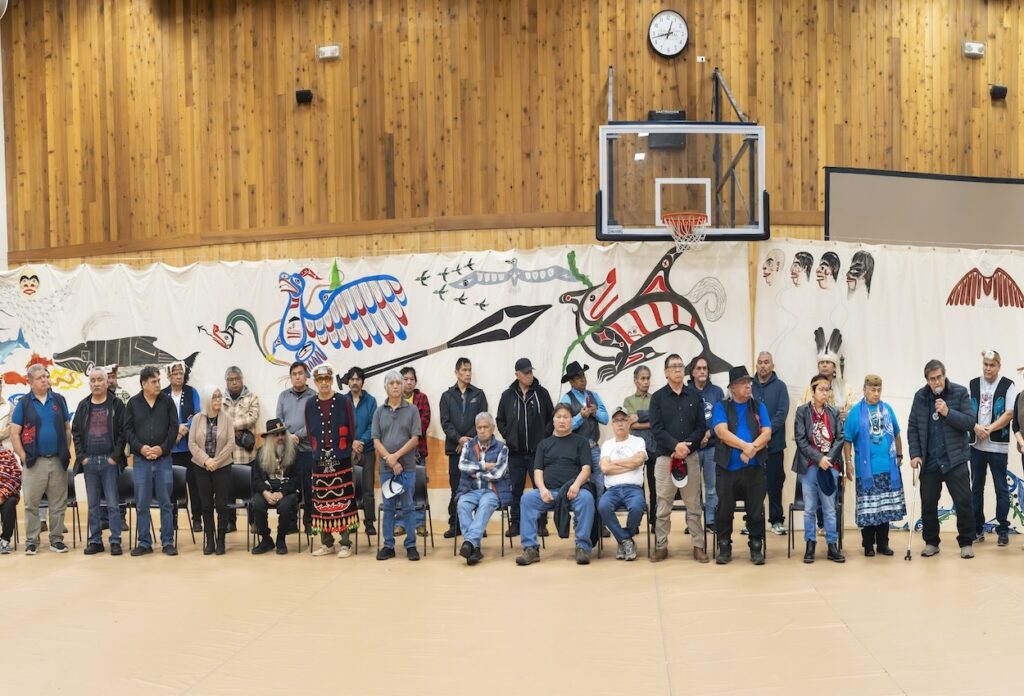
Almost a year after the roar of drums rang through a Port Alberni hall hosting Indigenous leaders from across the west coast of North America, the gathering continues to push for expediting the removal of fish farms out of BC’s waters.
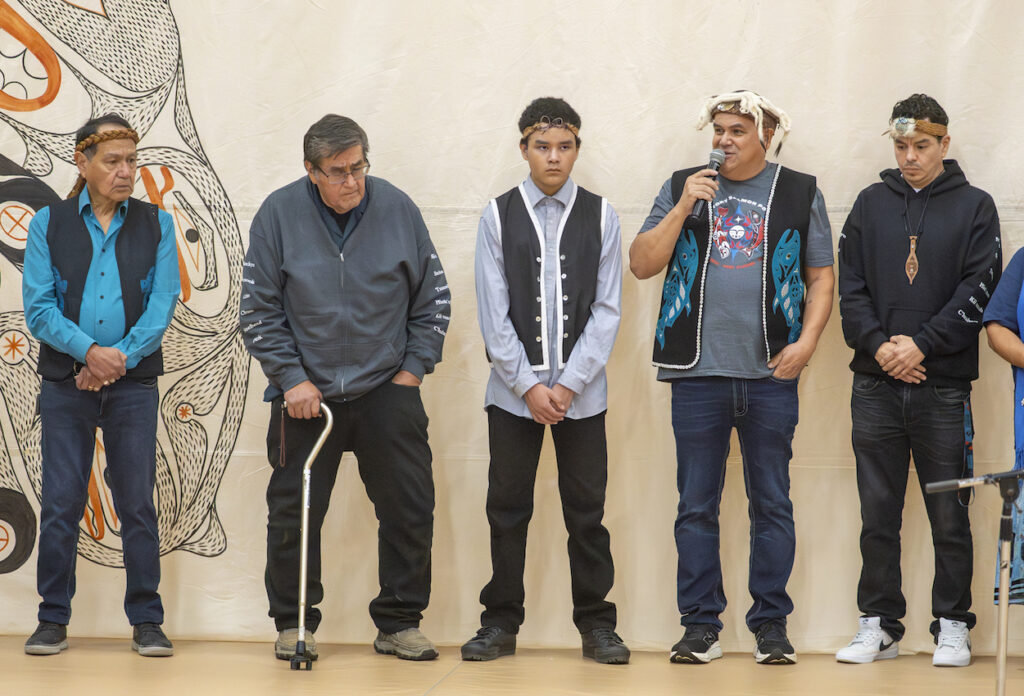
In late September, Ḥupač̓asatḥ Ḥawił (Hereditary Chief) Tsu Tsii In (Alton Watts) demanded the immediate closure and removal of Cermaq’s Port Alberni fish hatchery by the end of the year.
“Cermaq does not have social licence to operate in Ḥupač̓asatḥ Territory,” Watts said in a press release announcing the eviction notice. “They do not have our consent to rear invasive fish that threaten wild salmon stocks in our territory.”
Watts co-hosted the Migratory Salmon Potlatch in Port Alberni last November. The potlatch concluded with Chiefs from many First Nation’s signing a declaration that called on signatories to “relentlessly work towards the immediate removal of all open-net pen fish farms” from BC’s waters. The declaration highlighted how its aims would help wild salmon return to abundance.
Booting the Boot Lagoon Hatchery
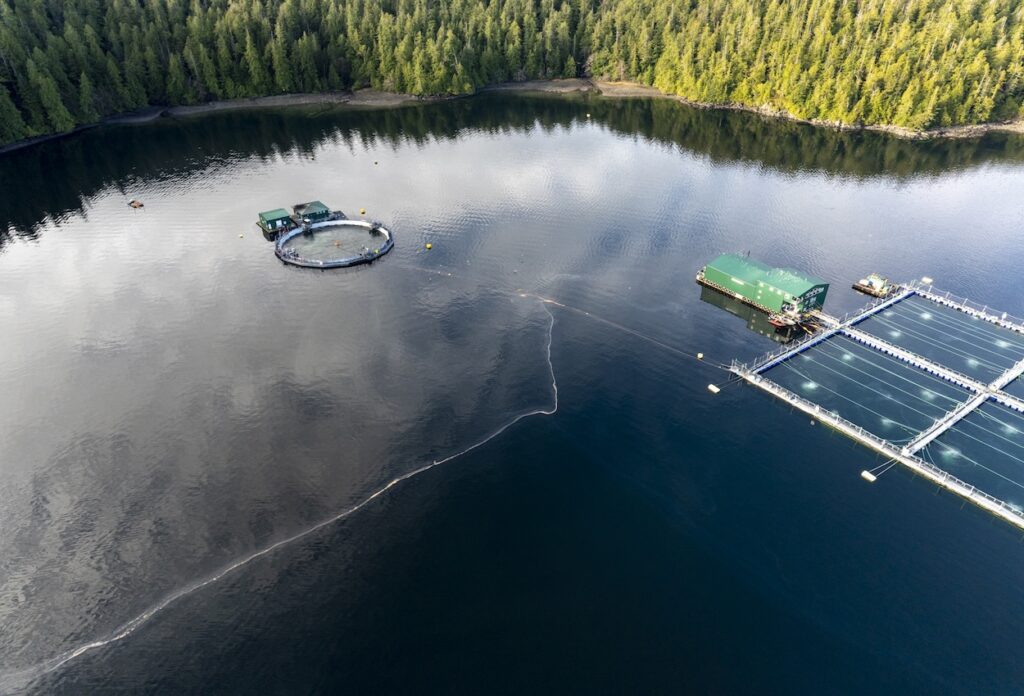
Watts’ eviction notice directly responds to the declaration’s call for urgent action, as it targets the Boot Lagoon hatchery, the site supplying the smolts (juvenile salmon) that fill Cermaq’s network of 14 fish farms near Tofino. That cohort of farms off Vancouver Island’s west coast represents one of the few North American locations where the pathogen- and pollution-producing facilities have been allowed to remain operating in the open ocean.
“It is within our sovereign control to cut off feedstock to operations that have been scientifically proven to cause harm to our relatives, wild Pacific salmon,” Watts said in his statement.
Cermaq’s Boot Lagoon hatchery grows Atlantic salmon, which are not native to British Columbia, from eggs to smolts. As their time at the hatchery comes to an end, the smolts get loaded into tanks, and put on a truck bound for the farms. Once at the farms, the salmon will spend their entire lives in a net with thousands of other fish, as they fight over the few oxygenated surface areas, trade disease and become infected with an abundance of sea lice that cannot be controlled.
Eviction Ordered as 2029 Ban Nears
The harms inside those net pens don’t stay put. They leach into the surrounding waters, creating massive risks for wild salmon, other marine life and those living on the coast.
With Washington State having banned open-net pens, BC is the only jurisdiction allowing them on the west coast of North America. In BC, over 130 First Nations want fish farms out, as do 65 per cent of citizens.
The federal government has committed to banning open-net pen salmon farms in BC by mid 2029.
Watts, in his news release, said coastal communities are waiting to see how the federal government will honour its 2029 commitment, a policy he noted Prime Minister Mark Carney’s government “has so far failed to advance.”
“Our Prime Minister has spoken eloquently in the past few days about sovereignty and resilience in the face of external threats,” Watts said. “With respect, we ask that the Prime Minister observe our right to enforce our own salmon laws and build a wild salmon economy that benefits all Canadians.”
Jake Romphf – Digital Communications at Clayoquot Action